
🧠 Your "SMART" isn’t as smart as you think.
Updated: Aug 28
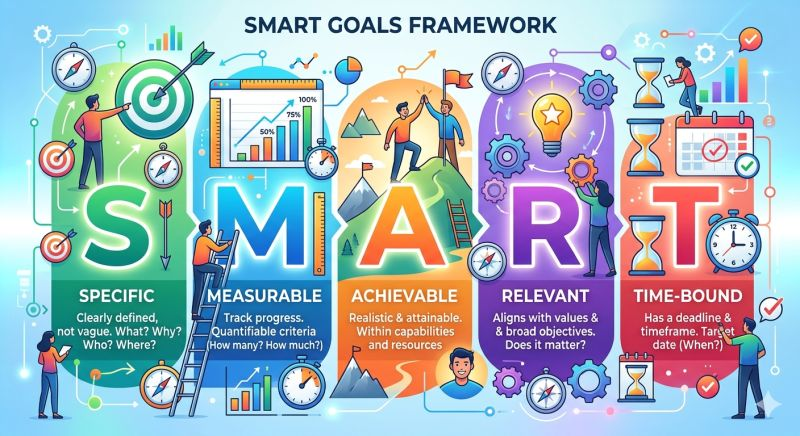
Ever wondered why a direct report delivers an output that’s "slightly off" or—worse—completely wrong? Before you question their competence, you might need to check your own communication.
In psychology, we call this The Curse of Knowledge/ curse of expertise. Once we know something, we find it nearly impossible to imagine not knowing it. As a manager, you have the full picture in your head, but when you relay instructions, you’re likely skipping the vital "connective tissue" your team needs to succeed.
At Hippocampus Space, we’ve run countless workshops where managers can easily recite the SMART acronym, but struggle to communicate the substance of each letter effectively.
If you want a quick win 🏆 for your leadership toolkit, here is how to truly implement SMART:
1️⃣ S: Specific (The "What")
Don't just describe a task; name the exact output. Define the hard and soft metrics. If the finish line isn't visible, they won't know when they’ve crossed it.
2️⃣ M: Measurable (The "How")
This is about quality and standards. It’s not just "do it," it’s "do it this way." For example: "Ensure project alignment through documented collaboration with the IT department."
3️⃣ A: Achievable (The "What If")
COVID taught us that even the best strategies can be eradicated overnight. Use this section to identify foreseeable uncontrollables. Give your team a "red flag" protocol: if X happens, notify me immediately so we can pivot.
4️⃣ R: Relevant (The "Why")
Is it Realistic? Hopefully. But is it Relevant? This is where you connect the task to the individual’s growth and the company’s mission. People don't burn out from hard work; they burn out when the work feels meaningless.
5️⃣ T: Time-bound (The "When")
Move beyond a single deadline. Provide a roadmap with scheduled touchpoints. This prevents "The Big Reveal" at the end of the month from becoming a disaster.
🚀 The Final Step: Closing the Feedback Loop
The most dangerous thing a manager can do is hand over a document and walk away. We all decode information differently based on our own cognitive biases.
🗣️Instead, have a dialogue. Ask them to explain the objective back to you in their own words. When you align your mental models, you eliminate surprises.
❓Could your managers benefit from mastering the art of the SMART objective?
At Hippocampus Space, we bridge the gap between strategy and execution. Let’s ensure your goals are delivered on time, on budget, and exactly as envisioned.



Comments