
🏗️ The High Cost of "Firefighting": Why Reactive Teams Are Error-Prone
Updated: Aug 28
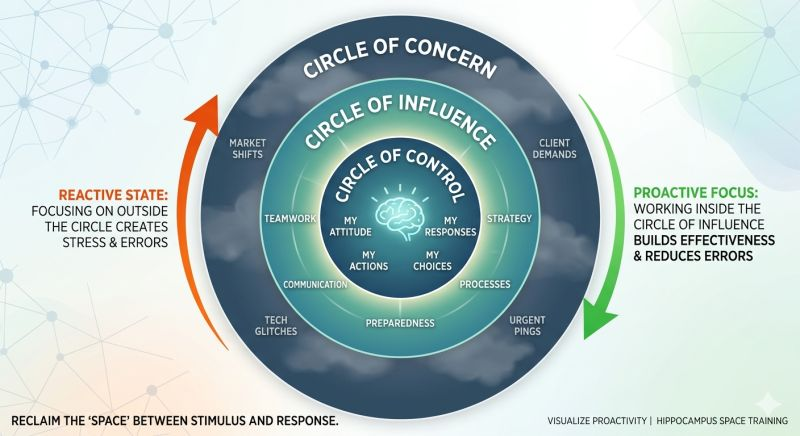
Is your team "busy," or are they just reactive?
We’ve all been there: A day filled with urgent pings, last-minute pivots, and a "whack-a-mole" approach to problem-solving. It feels productive because the adrenaline is high, but the results usually tell a different story.
When a team operates purely in a reactive state, quality is the first casualty.
🛑 The Reactive Death Spiral
When we react, we aren’t choosing our response; we are being controlled by the external factors. This leads to:
1️⃣Decision Fatigue: Making calls based on speed rather than strategy.
2️⃣The "Oversight" Effect: Missing critical details because the brain is in a "threat-response" loop.
3️⃣Compounding Errors: Fixes made in a rush often require their own fixes later on as the consequences of the decisions is felt.
💡 The Covey Shift: Reclaiming Your Influence
In The 7 Habits of Highly Effective People, Stephen Covey defines Proactivity as more than just taking initiative. It’s the realisation that between stimulus and response, there is a space. In that space lies our freedom to choose.
"Proactive people focus their efforts in the Circle of Influence. They work on the things they can do something about." — Stephen Covey
Reactive teams obsess over the Circle of Concern (market shifts, difficult clients, tech glitches). Proactive teams focus on their Circle of Influence (their processes, their communication, teamwork, collaboration and their preparedness).
🚀 From Firefighting to Fireproofing
Moving from reactive to proactive isn't just a mindset shift—it's a skill set. It requires training the brain to pause, evaluate, and act with intent rather than impulse.
When you expand your team's Circle of Influence, the error rate doesn't just drop—it plunges.
🧠 Ready to Break the Cycle?
If your team is stuck in a loop of "urgent" tasks and avoidable mistakes, it’s time to move the needle from reactive to proactive.
At Hippocampus Space, we specialise in training teams to reclaim that "space" between stimulus and response. Let’s get your team out of the flames and back into the driver’s seat.



Comments