
Leadership in the Red: Why leading with Targets alone is Killing Innovation 📉
Updated: Aug 28
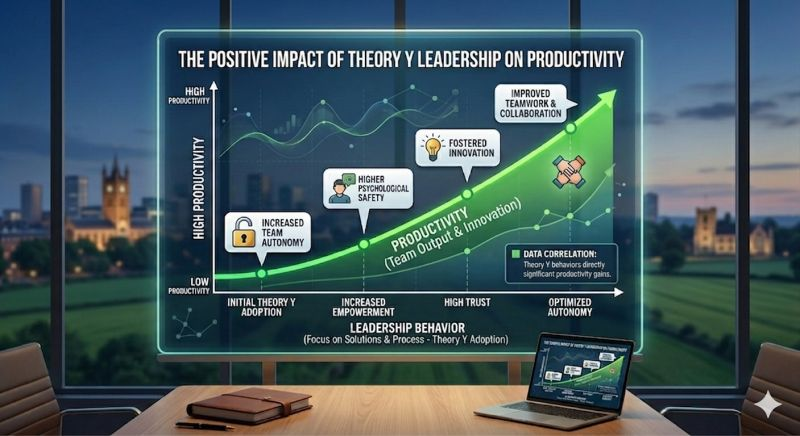
In the high-pressure world of corporate KPIs, it’s easy to fall into the "Target Trap." When numbers slip, many leaders instinctively tighten the reins, increase monitoring, and shift toward a rigid, top-down command structure. 🧱
But here’s the cold truth: Leading purely through the lens of target shortages is a fast track to a "Theory X" culture and a closed mindset. 🚫🧠
The Theory X Trap 🪤
Social psychologist Douglas McGregor introduced Theory X—the assumption that employees are inherently unmotivated, dislike work, and require constant supervision or "carrots and sticks" to perform. 🥕🚀
When leaders focus exclusively on what’s missing, they stop seeing their team as partners and start seeing them as variables in an equation. This leads to:
1️⃣Micromanagement: Checking in every hour doesn't fix the target; it just breaks the trust. ⏱️
2️⃣Reduced Autonomy: When failure is the only metric being discussed, people stop taking risks. 🛡️
3️⃣Fixed Mindset Loops: Believing that "this is just how the team is" rather than asking "how can we evolve the process?" 🔄
The Psychology of "Scarcity Brain" 🧠💨
Why do smart leaders fall for this? It comes down to Scarcity Mentality. From a psychological perspective, this creates several dangerous biases:
1️⃣Loss Aversion: The pain of missing a target feels twice as intense as the joy of hitting one. This drives leaders to lead from a place of fear rather than opportunity. 😱
2️⃣The Progress Principle: Research shows that the single most important motivator at work is making progress in meaningful work. When a leader only highlights the shortcomings, they strip away the feeling of progress. 📉
3️⃣Tunnelling: Leaders "tunnel" on the immediate gap, losing the ability to see long-term strategic solutions or cultural rot. 🚇
Moving from "Shortage" to "Growth" 🌱
A closed mindset views a missed target as a failure of ability. A Growth Mindset (as coined by Carol Dweck) views it as a data point for a pivot. 🔄
If you find yourself leaning into Theory X behaviors, try these shifts:
1️⃣De-escalate the Threat: Fear shuts down the prefrontal cortex—the part of the brain your team needs for creative problem-solving. Make it safe to discuss why the shortage exists without blame. 🧘♂️
2️⃣Focus on Input, Not just Output: You can’t always control the market, but you can control the quality of the "at-bats." Pivot the conversation to the process. 🛠️
3️⃣Assume Positive Intent: Shift back to Theory Y. Assume your team wants to succeed but is facing a barrier. Your job isn't to be the warden; it's to be the snowplow. 🚜
The Bottom Line:
Targets are essential markers, but if you lead by the spreadsheet alone, you’ll eventually find yourself leading an empty room.



Comments